Diva R Mejias. Your Wealth Architect™
— LIVE WORKSHOP —
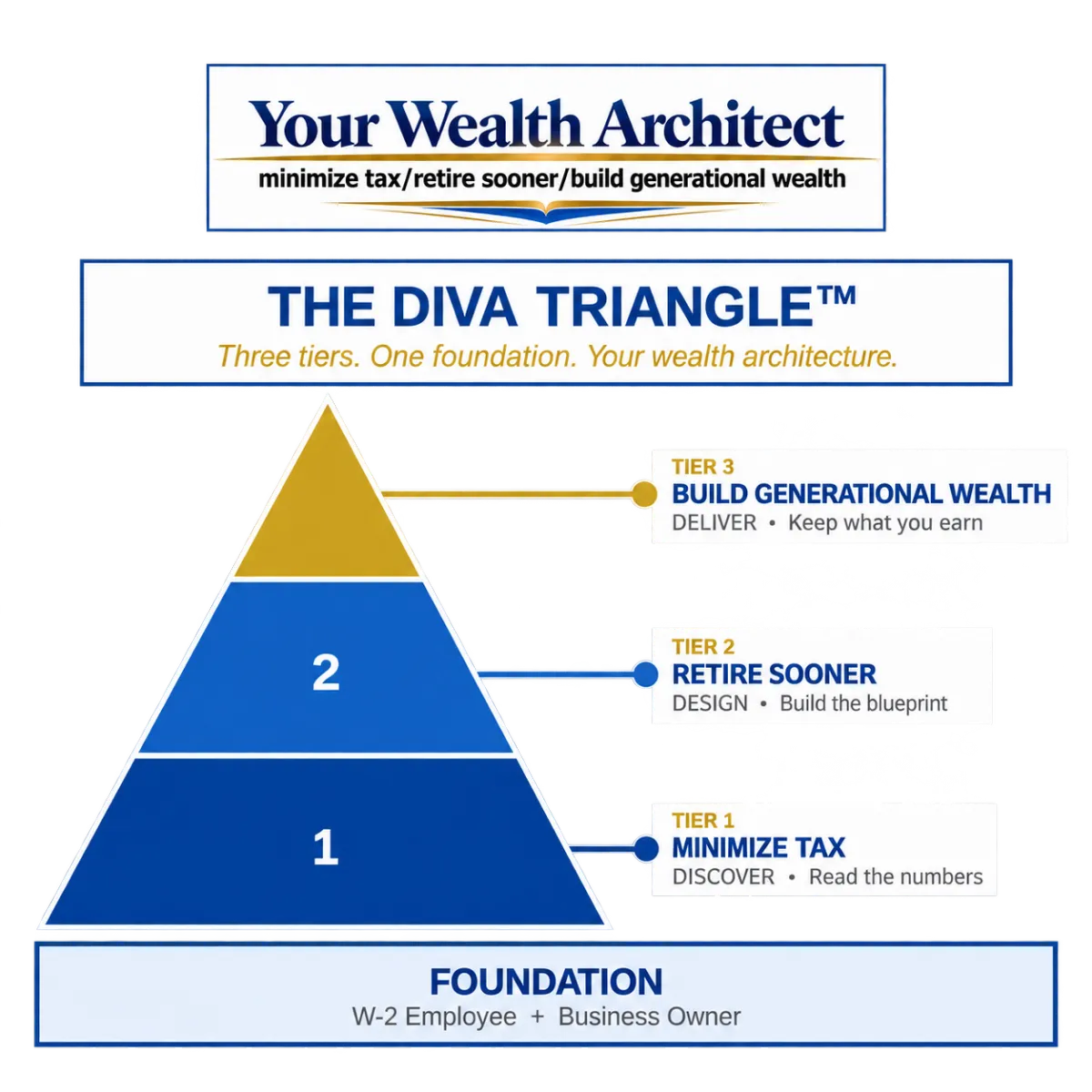
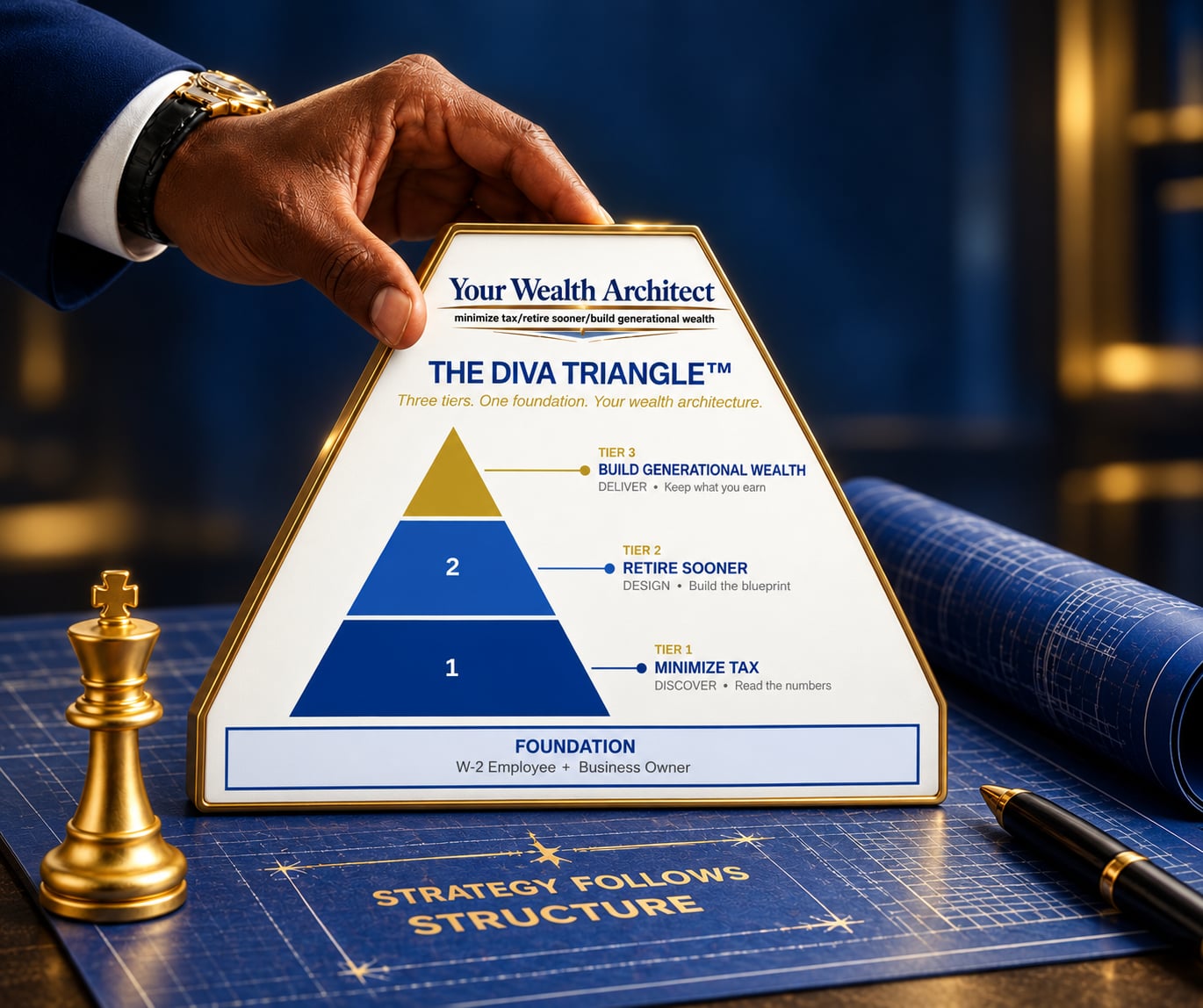
The Diva Triangle™
Three tiers. One foundation.
A half-day intensive workshop helping business owners gain clarity on
tax strategy, wealth preservation, retirement planning, and the financial
structures used to build a lasting legacy.

— LIVE WORKSHOP —
The Diva
Triangle™
Three tiers. One foundation. Your wealth architecture.

A half-day intensive workshop helping business owners gain clarity on
tax strategy, wealth preservation, retirement planning, and the financial
structures used to build a lasting legacy.
31 Years
Corporate Finance Experience
Former
District Controller
at UPS
Manage
$350M+
Annually
Main Street
Wealth
Strategy
When
October 24, 2026
Where
Enterprise Center Building
Omaha, Nebraska 68127
Time
Registration 8:30 am
Session Starts at 9:00am to 12:30pm
Most business owners are building wealth on only one tier
01
Minimize
Tax
Finding money already spent but never captured.
02
Retire
Stronger
Creating a destination for the money found.
03
Build Generational Wealth
Making sure what you built actually transfers.
You cannot
skip a tier.
Structure precedes strategy.
Most business owners are building wealth on only one tier
01
Minimize
Tax
Finding money already spent but never captured.
02
Retire
Stronger
Creating a destination for the
money found.
03
Build Generational Wealth
Making sure what you built
actually transfers.
You cannot
skip a tier.
Structure precedes strategy.
In a Half Day You Will Discover:
Your current
wealth-building tier
The mistake costing you at each level
The four Triangle Audit questions
Your next
strategic move
WITHOUT STRATEGY
Most people wait until tax season to think about strategy.
Reacting to financial decisions
Building without structure
WITH STRATEGY
Strategy happens before
December 31.
Making intentional moves
Building a wealth architecture
In a Half Day You Will Discover:
Your current
wealth-building tier
The mistake costing you at each level
The four Triangle Audit questions
Your next
strategic move
WITHOUT STRATEGY
Most people wait until tax season to think about strategy.
Reacting to financial decisions
Building without structure
WITH STRATEGY
Strategy happens before December 31.
Making intentional moves
Building a wealth architecture
Workshop Agenda (Half-Day(Morning))
@ Enterprise Center, Omaha Nebraska
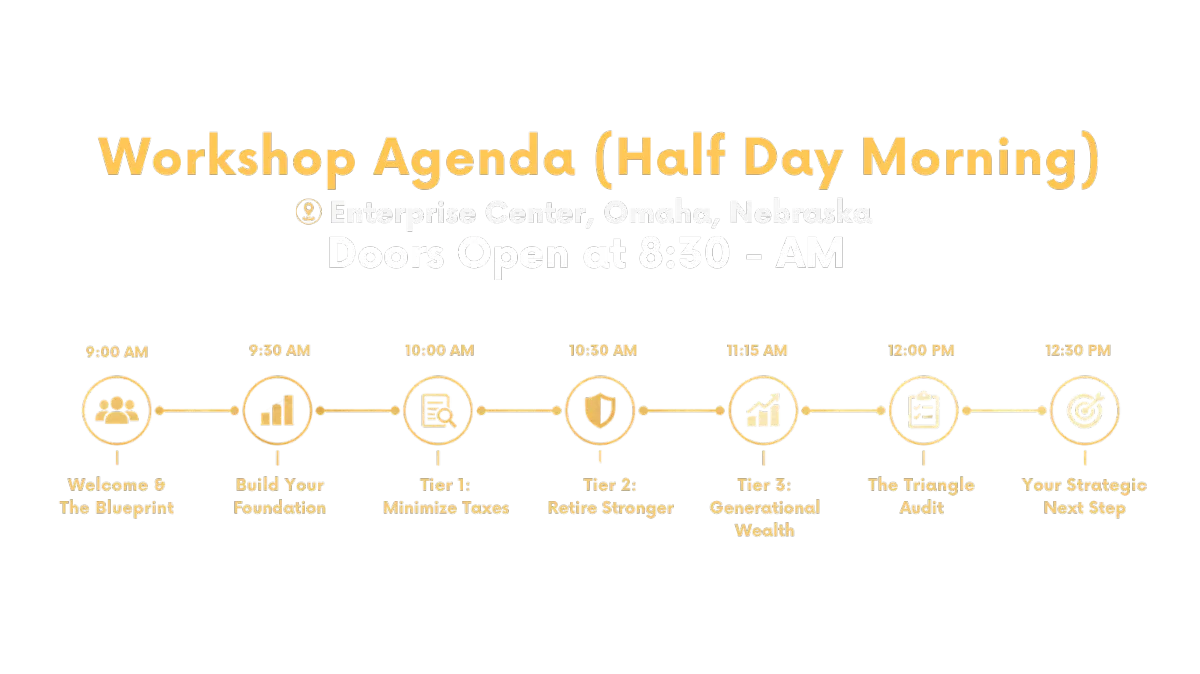
The Blueprint
Foundation
Minimize Taxes
Retire Stronger
Generational Wealth
Audit
Next Step
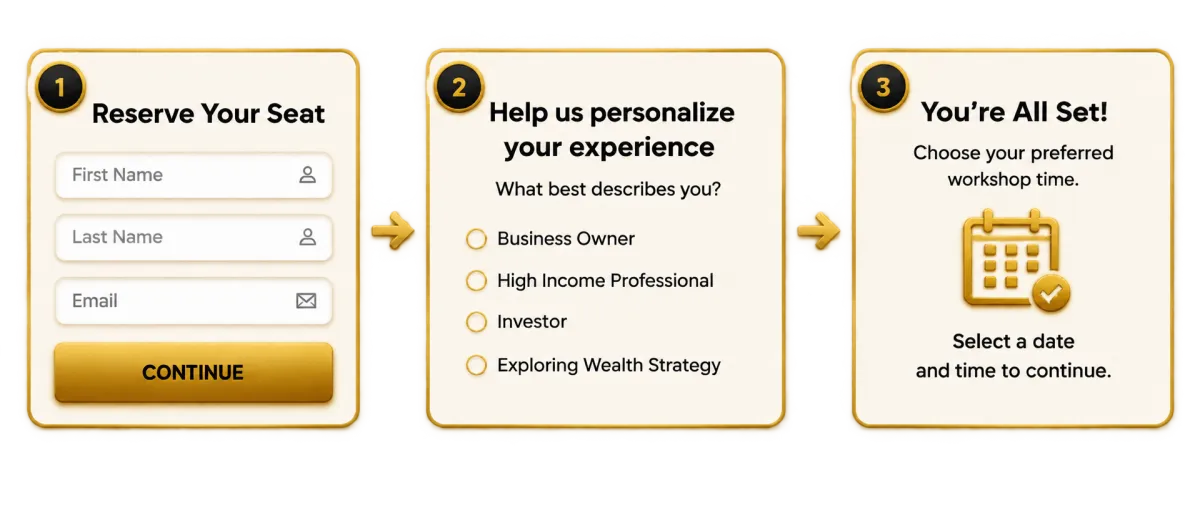
— Reserve Your Seat —
The Blueprint
Foundation
Minimize Taxes
Retire Stronger
Generational Wealth
Audit
Next Step
— Reserve Your Seat —
See Why Business Owners Are Rethinking Their Wealth Structure
Your numbers already tell a story.
The question is:
What story are they telling?
See Why Business Owners Are Rethinking Their Wealth Structure
Your numbers already
tell a story.
The question is:
What story are they telling?
Half Day(Morning)
Live Workshop
EXCLUSIVE SEATS
Save Your Spot
FREE BONUS FOR ATTENDEES
Tax Leak Calculator
LIVE Q&A
Get Your Questions Answered